
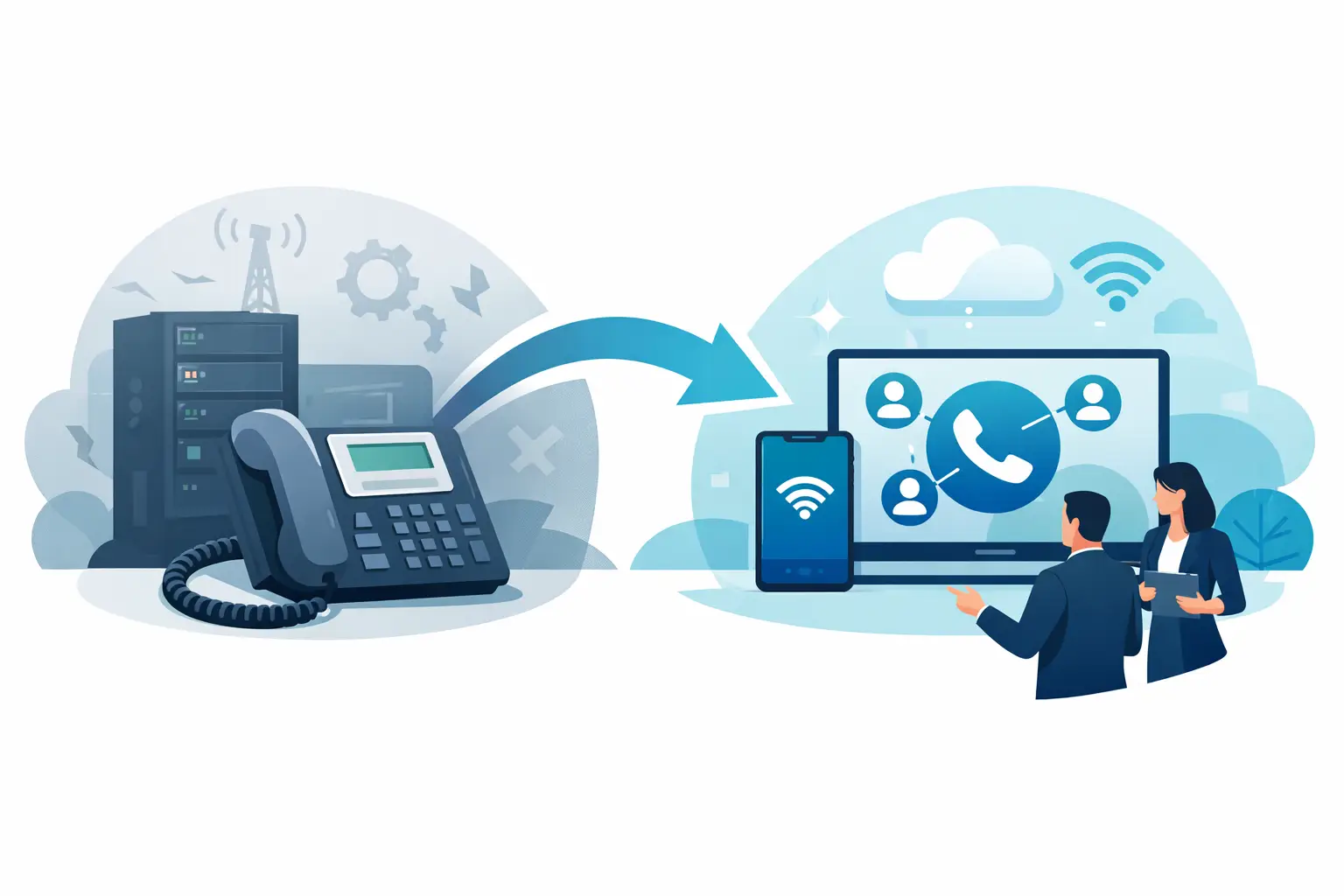
When a business phone system starts dictating how your team works, rather than supporting how your business runs, it is already costing more than the monthly bill. That is usually the moment legacy phone system replacement moves from a future project to an operational priority. Missed calls, limited reporting, aging hardware, and slow changes all add up fast, especially for businesses that need to move quickly.
For many companies, the problem is not just that the old system is outdated. It is that it was built for a different business. Maybe you had one office and now you have three. Maybe your staff is hybrid, your customer service volume has grown, or your team needs better routing, call recording, analytics, and after-hours coverage. A legacy platform can keep calls going for a while, but it usually cannot keep the business moving forward.
Why legacy phone system replacement matters now
Older PBX and on-premises phone systems were designed around fixed locations, fixed capacity, and expensive hardware upgrades. That model breaks down when your business needs flexibility. Adding users takes too long. Moving extensions requires technician time. Reporting is limited or nonexistent. And if a piece of hardware fails, the risk is not theoretical. It can disrupt sales, service, and internal operations the same day.
There is also the cost issue. Many companies assume staying with a legacy platform is cheaper because the system is already in place. In practice, the opposite is often true. Maintenance contracts, PRI or analog line costs, replacement parts, and emergency support visits can push telecom spending well above what a hosted VoIP platform would cost. When you add the productivity loss from poor call flow and limited visibility, the total cost of keeping the old system gets harder to justify.
That is why legacy phone system replacement is usually less about replacing handsets and more about upgrading business communications as a whole. The right platform can reduce telecom costs by up to 50%, while also improving how calls are answered, routed, monitored, and managed.
What businesses gain from a legacy phone system replacement
The immediate gain is flexibility. A hosted business VoIP system lets you add users, change call routing, support remote staff, and scale across locations without rebuilding your phone environment every time the business changes. For growing companies, that matters. The phone system should grow with your company, not force workarounds every time you add a department or office.
The second gain is visibility. Many legacy systems give decision-makers almost no usable reporting. You may know your phone bill, but not how many calls were missed, how long callers waited, which locations are overloaded, or where customer experience is breaking down. Modern business communications platforms provide reporting that helps operations leaders make decisions based on actual call activity, not guesswork.
The third gain is customer experience. Better IVR design, smarter routing, voicemail-to-email, call recording, ring groups, overflow handling, and AI-enabled call automation can all improve how customers reach your team. That does not mean every business needs every advanced feature. It does mean that a replacement project should solve service issues, not just recreate old problems on newer equipment.
The biggest mistakes in legacy phone system replacement projects
One of the most common mistakes is treating the project like a simple line-for-line swap. If the only goal is to replicate the current setup, you miss the opportunity to fix the issues that made the old system a problem in the first place. Businesses often carry over confusing auto attendants, inefficient hunt groups, and outdated extension structures because nobody steps back to redesign the call flow.
Another mistake is underestimating implementation. A modern cloud phone system is easier to manage long term, but a successful migration still requires planning. Number porting, network readiness, handset deployment, user training, call routing design, failover planning, and business continuity all need to be addressed upfront. The provider matters here. Businesses need more than dial tone. They need implementation guidance and support that reduces risk.
The third mistake is choosing purely on price. Lower monthly rates can look attractive, but a low-cost provider that offers minimal support, limited engineering help, or weak onboarding often creates more problems than it solves. For a business decision-maker, the right question is not just what the service costs per seat. It is what the provider will help you accomplish, how quickly issues get resolved, and whether the platform supports growth.
How to evaluate a replacement the right way
A strong evaluation starts with business needs, not phone features. Look at how calls affect revenue, service levels, staffing, and daily operations. Sales teams may need better mobile access and CRM-connected workflows. Customer service teams may need queue reporting, call recording, and overflow coverage. Multi-site organizations may need centralized administration with location-level control. Those needs should shape the replacement plan.
It also helps to look closely at what your current system cannot do. If reporting is weak, make analytics a priority. If after-hours calls are mishandled, redesign the call flow. If support from your current vendor is inconsistent, make service responsiveness part of the buying decision. A replacement project should solve practical business problems, not just modernize technology for its own sake.
Network readiness is another key factor, but it should not become an excuse for delay. Most business networks can support hosted VoIP with the right assessment and configuration. The goal is to validate internet capacity, quality of service, failover options, and site-specific requirements before migration. Done properly, this reduces surprises and gives leadership confidence that the new environment will perform reliably.
What a modern replacement should include
A business-ready replacement should include more than hosted calling. It should provide a communications platform that supports operations, customer engagement, and growth. That often means professionally designed call flows, auto attendants that reflect how the business actually routes calls, hunt groups and queues that reduce missed opportunities, and reporting that helps managers monitor performance.
For many organizations, AI is also becoming part of the conversation. That does not mean replacing employees with automation. It means using AI-enabled telephony to handle routine interactions, improve routing, support after-hours responsiveness, and reduce pressure on live staff. For businesses with repetitive call patterns, this can improve service while lowering administrative load.
Support should be part of the package, not an afterthought. The value of a hosted system drops quickly if changes take too long or issues sit unresolved. Ongoing support, training, and access to implementation expertise are what turn a phone system into a stable business asset.
A consultative provider like Voice2IP approaches replacement as an operational improvement project, not just another phone system sale. That distinction matters because communications affect every department that answers customers, manages schedules, supports staff, or drives revenue.
Legacy phone system replacement for different business sizes
Small businesses usually care most about cost control, reliability, and ease of use. They need a system that works without needing in-house telecom expertise. In that environment, replacing a legacy phone system can simplify administration, support remote work, and lower monthly spend while still adding features that make the business look more responsive and professional.
Mid-sized companies often face a different issue: growth has outpaced the original system. They may have multiple departments, several locations, and a mix of old equipment that no longer fits together cleanly. Here, replacement is about standardization, better reporting, and more control across the organization.
Enterprise organizations usually focus on resilience, scale, integration, and governance. They need a provider that can support complex call routing, large user counts, continuity planning, and ongoing changes without creating operational drag. The technology matters, but so does project management and support capacity.
Timing the move without disrupting the business
The best time to replace a legacy phone system is usually before the next failure, contract renewal, or office expansion forces a rushed decision. A planned transition gives you time to review call patterns, redesign workflows, prepare users, and build a cleaner setup than the one you have today.
That said, not every business needs to replace everything at once. Some migrations are best handled in phases, especially for larger environments or organizations with multiple locations. A phased approach can reduce disruption, but it has to be planned carefully so temporary complexity does not become a permanent problem. It depends on the age of the current environment, contract terms, and how urgent the operational issues are.
The companies that get the best results from legacy phone system replacement are usually the ones that treat it as a business improvement initiative, not a hardware refresh. They look at costs, customer experience, staff productivity, support quality, and future growth together. When that happens, the replacement does more than remove old equipment. It gives the business a communications platform that is easier to manage, less expensive to run, and far better aligned with where the company is headed.
If your current phone system is making simple changes feel expensive, slow, or risky, that is your signal to review it before the next problem makes the decision for you.