
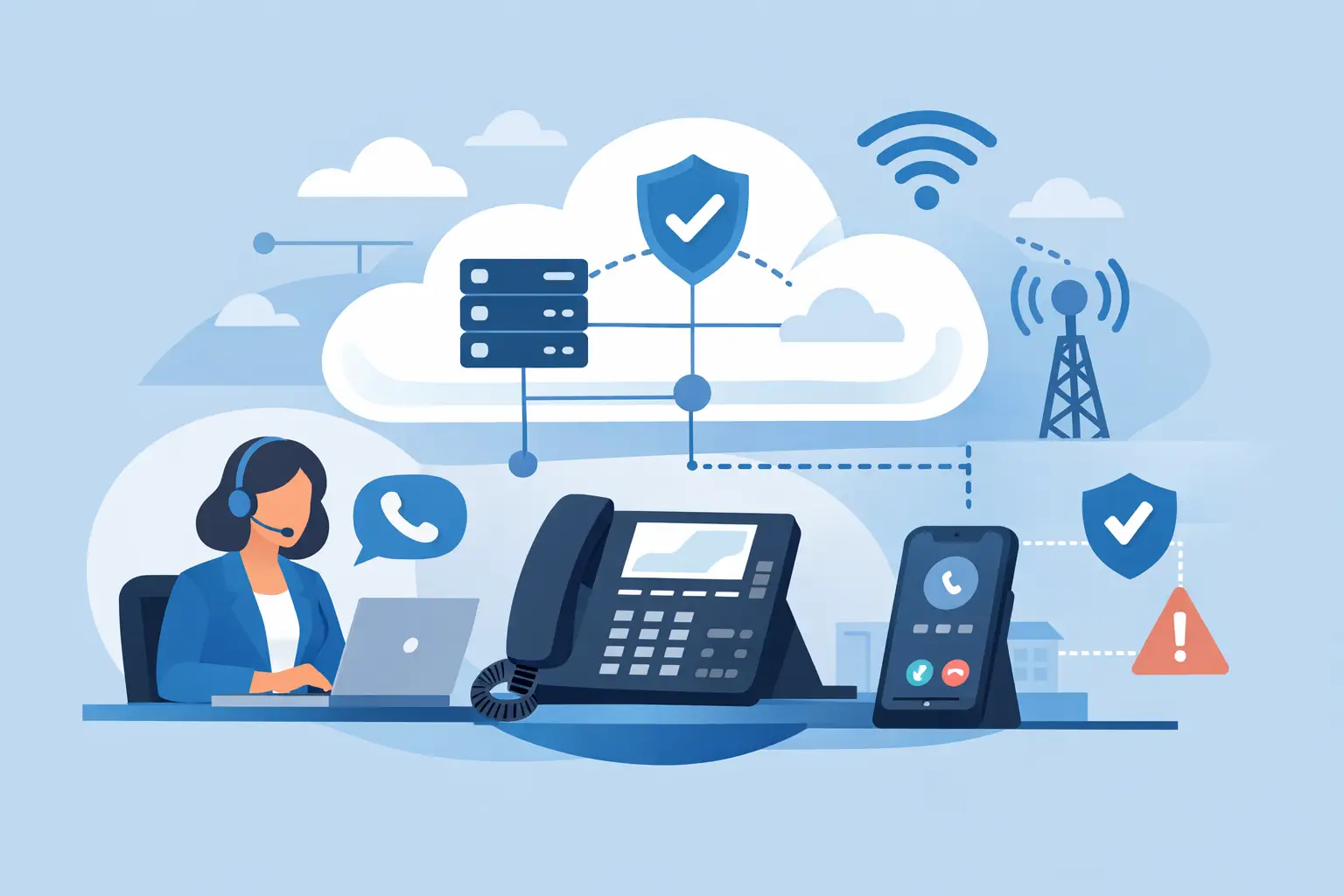
A missed sales call at 10:12 a.m. can cost more than a month of phone service. That is why the real question is not simply is voip reliable for business, but what level of reliability your business actually needs and whether your provider is built to deliver it.
The short answer is yes. VoIP can be highly reliable for business when it is designed, deployed, and supported correctly. In many cases, it is more dependable than legacy phone systems because it is easier to scale, easier to monitor, and faster to recover when something goes wrong. But reliability is not automatic. It depends on network readiness, provider quality, call routing, failover planning, handset setup, and support.
For business leaders, that distinction matters. A low-cost consumer-grade VoIP line and a managed business communications platform are not the same thing. If your phones support sales, customer service, scheduling, dispatch, or multi-location operations, reliability has to be engineered into the system from the start.
Is VoIP reliable for business in real-world use?
In practical business use, VoIP reliability comes down to four things: uptime, call quality, resilience, and support response.
Uptime is whether your service is available when your team needs it. Call quality is whether conversations sound clear without delays, jitter, or dropped audio. Resilience is what happens when the internet connection, device, or office location has a problem. Support response is how quickly issues are identified and resolved before they affect customers.
Traditional phone systems built their reputation on stability because they ran on dedicated copper lines. That model worked, but it was expensive, limited, and difficult to adapt. Modern VoIP shifts voice traffic onto managed internet-based infrastructure, which gives businesses far more flexibility. You can add users faster, support remote teams, route calls between locations, monitor performance, and integrate reporting or automation tools that older systems simply cannot handle well.
The trade-off is that your phone system becomes tied to your broader network environment. If the network is poorly configured or the provider offers weak support, reliability suffers. If the system is professionally implemented and actively managed, VoIP performs at a very high level.
What makes business VoIP reliable or unreliable?
The biggest reliability factor is the network behind the phones. VoIP does not need massive bandwidth, but it does need consistent bandwidth and proper traffic handling. Businesses with stable internet service, current networking equipment, and basic quality-of-service settings usually have no trouble supporting voice.
Problems tend to show up when voice traffic is competing with everything else on an overloaded connection. Large file uploads, video meetings, guest Wi-Fi traffic, and old firewall hardware can all affect call quality if no one has planned for them. This is one reason implementation matters. A business VoIP rollout should include a network review, not just phone delivery.
The provider matters just as much. Some vendors simply sell seats and expect the customer to figure out the rest. Others act as a service partner, helping with system design, call flow planning, number porting, failover setup, training, and ongoing support. That difference shows up quickly when there is an outage, a carrier issue, or a location change.
Redundancy also plays a major role. Reliable VoIP systems can reroute calls to mobile devices, alternate offices, voicemail, or backup numbers if a site goes offline. That means a local internet issue does not have to become a customer-facing communications failure. Businesses that depend heavily on phone traffic should expect this kind of contingency planning.
Call quality is part of reliability
When buyers ask whether VoIP is reliable, they often mean more than whether the phones turn on. They want to know whether calls sound professional.
Poor call quality damages customer experience fast. If customers hear choppy audio, long delays, echoes, or one-way sound, they start repeating themselves or abandoning the call altogether. For internal teams, the effect is slower service, frustrated staff, and missed details.
Good business VoIP avoids this through a combination of network readiness, correctly configured devices, quality carriers, and active monitoring. A well-managed platform should not leave you guessing why calls sound bad on Tuesdays or why one department has more issues than another. Reporting and troubleshooting should be part of the service, not an afterthought.
This is where managed providers create real value. They do not just provide dial tone. They help control the conditions that affect call performance over time.
Reliability for remote and hybrid teams
For many organizations, reliability now includes employees working from home, on the road, or across multiple offices. In that environment, VoIP often has a clear advantage over legacy systems.
A traditional on-premise phone setup is tied to a physical office. When teams become distributed, those systems start showing their limits. VoIP, by contrast, allows users to take calls from desk phones, softphones, or mobile apps while staying connected to the same business phone system. Extensions, voicemail, call routing, reporting, and business numbers all stay consistent.
That flexibility improves continuity. If one office loses power or internet access, calls can be redirected elsewhere. If a weather event closes a site, staff can continue answering from another location. If your business is growing, adding users or locations does not require rebuilding the phone system from scratch.
Of course, remote reliability still depends on each user’s local connection. Home internet quality varies. But a professionally configured VoIP system can reduce risk by giving teams multiple ways to stay connected instead of relying on a single desk phone in a single building.
Security and reliability go together
A phone system is only reliable if it is also secure. Fraud, misconfiguration, unauthorized access, and poorly managed endpoints can all disrupt service.
Business VoIP should include secure provisioning, user controls, call routing protections, and ongoing administrative oversight. For companies with compliance concerns or sensitive customer interactions, security planning should be part of the initial design rather than something added later.
This is another area where cheap, unmanaged options often create problems. They may look cost-effective upfront, but if nobody is monitoring changes, managing credentials, or reviewing suspicious activity, the business takes on unnecessary risk. Reliability is not just about avoiding downtime. It is about maintaining stable, trusted communications every day.
Why some businesses think VoIP is unreliable
In most cases, bad experiences with VoIP come from poor implementation, not from the technology itself.
A company signs up for a bargain provider, plugs phones into an aging network, skips testing, and assumes everything will work. Then calls drop, audio breaks up, or porting gets delayed. The result is a reputation problem for VoIP, when the real issue was lack of planning.
Business communications are operational infrastructure. They should be treated like any other critical system. That means reviewing internet performance, identifying failover options, setting up call flows correctly, training staff, and working with a provider that offers responsive support. Businesses that take this approach usually find VoIP to be reliable, scalable, and significantly more cost-effective than legacy service.
In fact, reliability and savings often go together. Hosted VoIP can reduce hardware costs, lower carrier expenses, simplify moves and changes, and eliminate the maintenance burden of old phone systems. For many organizations, that creates an opportunity to save up to 50% while improving flexibility and visibility.
How to evaluate whether a VoIP provider is reliable for your business
Ask direct questions. What uptime standards do they target? How do they handle failover? What support is available after deployment? Will they review your network before implementation? Can they support multi-site routing, remote users, IVR, reporting, and future growth?
Also ask who is responsible when something breaks. That answer tells you a lot. If the provider only supplies service and pushes the rest back on your team, you may be left managing multiple vendors during an outage. If they take a consultative, service-led approach, reliability becomes a shared operational priority.
For many businesses, the right partner is not just selling phone service. They are designing a communications platform that supports customer experience, team productivity, and growth. That includes hosted calling, call flow optimization, reporting, automation, AI-enabled call handling, and support that stays engaged after go-live.
Voice2IP is built around that model. The focus is not just replacing a phone line. It is delivering a business-ready system that scales, performs, and is supported when your team needs it.
So, is VoIP reliable for business?
Yes, when it is implemented as a business system rather than bought as a commodity. Reliable VoIP depends on the quality of the provider, the strength of the network, the depth of support, and the planning behind the rollout.
If your current phone setup is expensive, hard to manage, or limiting growth, VoIP is not a risk to avoid. It is a technology to evaluate properly. The businesses that get the best results are the ones that treat communications as a performance driver, not just another utility bill. Start there, and reliability becomes a design choice, not a gamble.